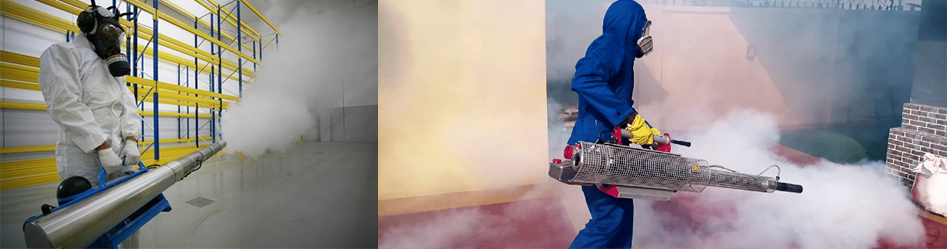
Fumigants are used where regulations require “Zero Tolerance for Insects” in goods or premises or where high manufacturing standards such as “ZeroDischarge” are required.
Because a successful fumigation procedure entails calculating, administering, and monitoring the appropriate quantity of fumigant within a suitably gas tight enclosure needs extensive knowledge and experience, fumigation treatments are performed by professionals with specialised knowledge.
As fumigation treatment requires a great deal of expertise, technical knowledge, and the use of harmful gases, it should only be performed by a trained and authorised agency that is regulated by the appropriate government authorities.
The doses are still another key component of any fumigation operation to consider. Fumigant dosage is nothing more than the amount of gas delivered into an enclosure with a known volume, which has been pre-calculated in advance. Incorrect Fumigant Dosages can result in product damage and insect survival if the chemicals are used incorrectly.
The dosages are determined with consideration for the safety of the cargo as well as the safety of the operator who is doing the fumigation activities. Another important component in the fumigation process is the gas tightness of the enclosure. This is another issue that must be considered. The greater the gas tightness of an enclosure, the more promising the outcomes it produces.